
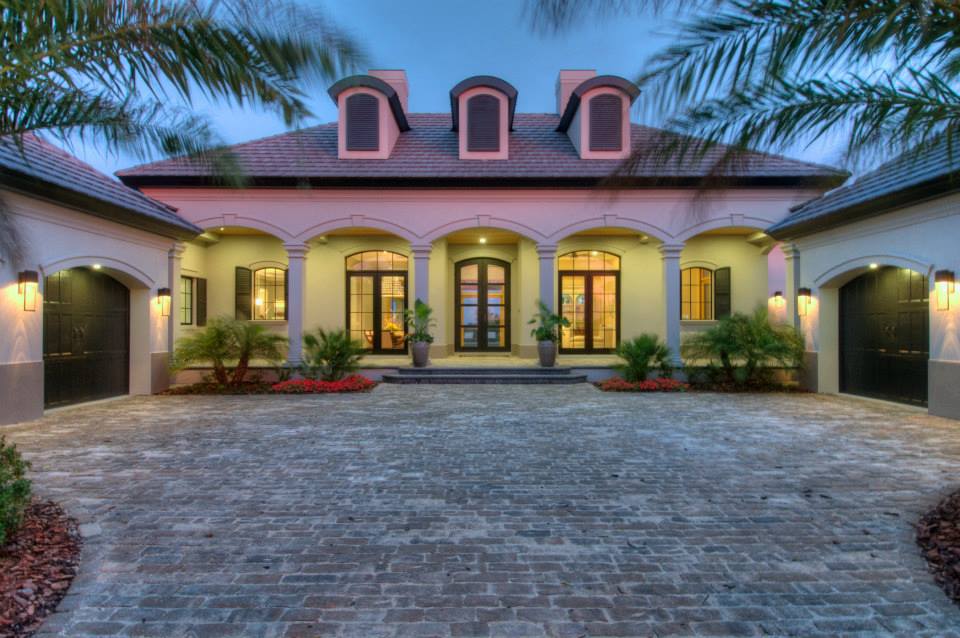
Lake Club Lakewood Ranch

The skinny on slate

Slate is a fine-grained, foliated, homogeneous metamorphic rock derived from an original shale-type sedimentary rock composed of clay or volcanic ash through low-grade regional metamorphism. It is the finest grained foliated metamorphic rock. Foliation may not correspond to the original sedimentary layering, but instead is in planes perpendicular to the direction of metamorphic compression.

Slate can be made into roofing slates, a type of roof shingle, or more specifically a type of roof tile, which are installed by a slater. Slate has two lines of breakability – cleavage and grain – which make it possible to split the stone into thin sheets. When broken, slate retains a natural appearance while remaining relatively flat and easy to stack. A “slate boom” occurred in Europe from the 1870s until the first world war, allowed by the use of the steam engine in manufacturing slate tiles and improvements in the road and waterway transportation systems.

Slate is particularly suitable as a roofing material as it has an extremely low water absorption index of less than 0.4%, making the material waterproof. In fact, this natural slate, which requires only minimal processing, has the lowest embodied energy of all the roofing materials. Natural slate is used by building professionals as a result of its beauty and durability. Slate is incredibly durable and can last several hundred years, often with little or no maintenance. Its low water absorption makes it very resistant to frost damage and breakage due to freezing. Natural slate is also fire resistant and energy efficient.

Slate tiles are often used for interior and exterior flooring, stairs, walkways and wall cladding. Tiles are installed and set on mortar and grouted along the edges. Chemical sealants are often used on tiles to improve durability and appearance, increase stain resistance, reduce efflorescence, and increase or reduce surface smoothness. Tiles are often sold gauged, meaning that the back surface is ground for ease of installation.

From Wikipedia
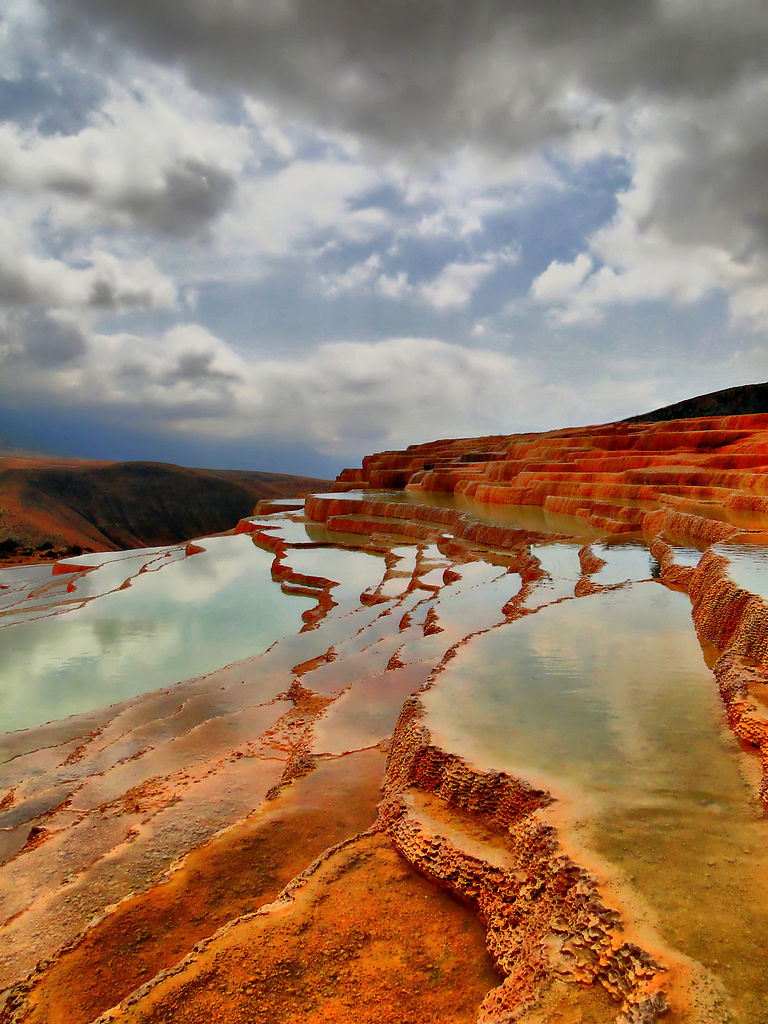
Travertine

The truth about travertine

Travertine forms from geothermal springs and is often linked to siliceous systems that form siliceous sinter. Macrophytes, bryophytes, algae, cyanobacteria, and other organisms often colonise the surface of travertine and are preserved, giving travertine its distinctive porosity.

Travertine is often used as a building material. The Romans mined deposits of travertine for building temples, aqueducts, monuments, bath complexes, and amphitheaters such as the Colosseum, the largest building in the world constructed mostly of travertine.

Other notable buildings using travertine extensively include the Sacré-Cœur Basilica in Paris, the 20th-century Getty Center in Los Angeles, California, and Shell-Haus in Berlin. The travertine used in the Getty Center and Shell-Haus constructions was imported from Tivoli and Guidonia.

Travertine is one of several natural stones that are used for paving patios and garden paths. It is sometimes known as travertine limestone or travertine marble; these are the same stone, although travertine is classified properly as a type of limestone, not marble. The stone is characterised by pitted holes and troughs in its surface. Although these troughs occur naturally, they suggest signs of considerable wear and tear over time. It can also be polished to a smooth, shiny finish, and comes in a variety of colors from grey to coral-red. Travertine is most commonly available in tile sizes for floor installations.

Travertine is one of the most frequently used stones in modern architecture. It is commonly used for façades, wall cladding, and flooring. The lobby walls of the modernist Willis Tower (1970) (formerly Sears Tower) in Chicago are made of travertine.[18] Architect Welton Becket frequently incorporated travertine into many of his projects. The first floor of the Becket-designed UCLA Medical Center has thick travertine walls. Architect Ludwig Mies van der Rohe used travertine in several of his major works, including the Toronto-Dominion Centre, S.R. Crown Hall and the Farnsworth House.

From Wikipedia – Photo by M. Samaee